Toon Cats: A Whimsical Display Font for Cartoon-Themed Web Design
Testing Toon Cats in a Hero Section for a Kids’ Online Course Landing Page
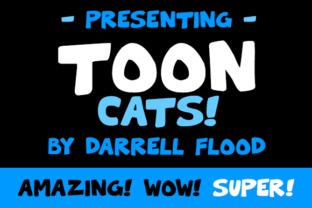
I recently started designing a landing page for a new online course aimed at teaching kids how to draw cartoons. The brand needed a strong visual identity that felt playful and imaginative. I downloaded Toon Cats, a cute, comic bubble lettering display font created by Darrell Flood, and tested it in the hero section. Right away, the font gave the headline a lighthearted, animated feel that matched the course’s tone. As a web designer, I appreciated how the font’s rounded edges and bouncy baseline created a sense of movement and joy without sacrificing legibility.
How Toon Cats Builds Visual Hierarchy in a Landing Page Header
Toon Cats works best as a display font, so I used it exclusively for the main headline and subheadings. The font’s bold, cartoonish style made it perfect for drawing attention to key messages like “Learn to Draw Like a Pro Cartoonist.” I paired it with a clean sans serif for body text to maintain readability and balance. Because Toon Cats is a decorative font, I avoided using it in long paragraphs or navigation menus. Instead, I reserved it for short, impactful phrases that needed to stand out, like “Limited Spots Available” on a call-to-action button.
Using Toon Cats for a Creative Portfolio Website with a Cartoon Theme
On another project, I was building a portfolio site for a freelance illustrator who specializes in cartoon-style character design. The goal was to make the site feel fun and approachable, while still looking professional. I applied Toon Cats to the logo and section headers, and the result was instantly recognizable. The comic bubble lettering gave the site a unique personality that aligned perfectly with the artist’s brand. I also tested the font over a light background with a subtle pattern, and it remained crisp and readable even at smaller sizes.
Optimizing Toon Cats for Mobile Screens and Responsive Layouts
One thing I always test when using display fonts like Toon Cats is how they perform on mobile devices. While the font looked great on desktop, I noticed some of the finer details—like the inner shadows and rounded corners—became less distinct on smaller screens. To compensate, I increased the font size slightly and added a bit more letter spacing to ensure each character remained legible. I also made sure the font was embedded using a fast-loading webfont format to keep the site’s performance smooth.
Pairing Toon Cats with Supporting Fonts for a Balanced UI
As a UI designer, I know that font pairing is essential for creating a cohesive visual language. When using Toon Cats in a header or hero banner, I recommend pairing it with a clean, modern sans serif like Open Sans or Lato for body text. This contrast helps maintain a whimsical yet professional tone. If the website has a more editorial feel, such as a blog about cartoon history, I might use a serif font like Merriweather for secondary text to add sophistication. The key is to let Toon Cats shine in its intended role—decorative, attention-grabbing headlines—while supporting fonts handle readability and structure.
How Toon Cats Adds Personality to Online Store Banners and Product Pages
I recently helped a client redesign their Shopify store that sells custom cartoon-themed apparel. We wanted the homepage banners and product titles to feel fun and engaging. Using Toon Cats for the main banners gave the site a playful energy that matched the brand’s cartoon mascot. I made sure the font was placed over a high-contrast background so it remained visible and readable. For product descriptions and buttons, I used a more neutral font to keep the layout from feeling too busy. The combination gave the store a unique visual identity that stood out in a crowded niche.
Checking Licensing and Format Options for Commercial Use of Toon Cats
Before finalizing any font in a client project, I always double-check the licensing and format options. Darrell Flood, the creator of Toon Cats, offers the font in standard webfont formats like WOFF and TTF, which makes it easy to embed in websites or design assets. I also confirmed that the font includes commercial use rights, which is essential when working on projects for small businesses, online stores, or digital brand kits. If you're using Toon Cats in a SaaS product or downloadable template, be sure to review the licensing terms to avoid any legal issues later.
Using Toon Cats in Social Media Graphics and Digital Ads
Toon Cats also works well beyond the web. I used it in a set of Instagram story templates for a coaching brand that wanted to emphasize fun and creativity. The comic bubble style made the text pop over colorful backgrounds, and the font’s rounded shapes helped soften the overall look. I exported the graphics as PNGs with optimized file sizes to ensure fast loading on social platforms. Whether it's for a digital ad, a blog header, or a promotional banner, Toon Cats adds a lighthearted touch that’s hard to ignore.
Final Thoughts on Choosing Toon Cats for Whimsical, Cartoon-Themed Projects
If you're working on a digital project that needs a touch of cartoon charm, Toon Cats is a strong contender. As a display font, it excels in short, high-impact text elements like headlines, logos, and CTA buttons. It’s especially effective for websites and branding materials aimed at kids, creatives, or anyone looking to inject a bit of humor into their design. Just remember to pair it wisely, test for readability across devices, and confirm licensing before launch. Whether you're designing a course landing page, a boutique online shop, or a personal portfolio, Toon Cats brings a unique blend of fun and functionality to the table.